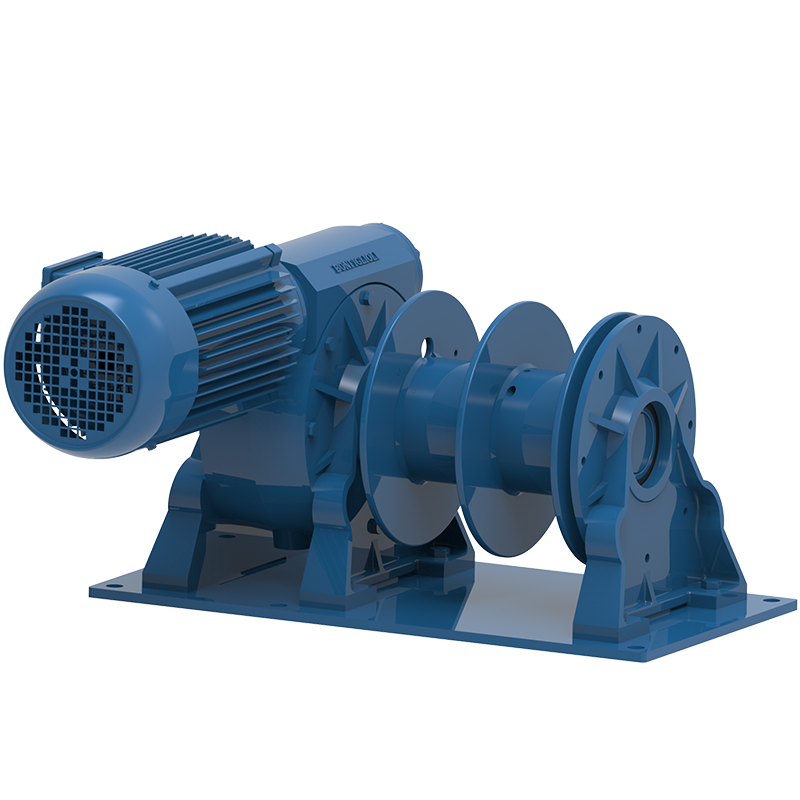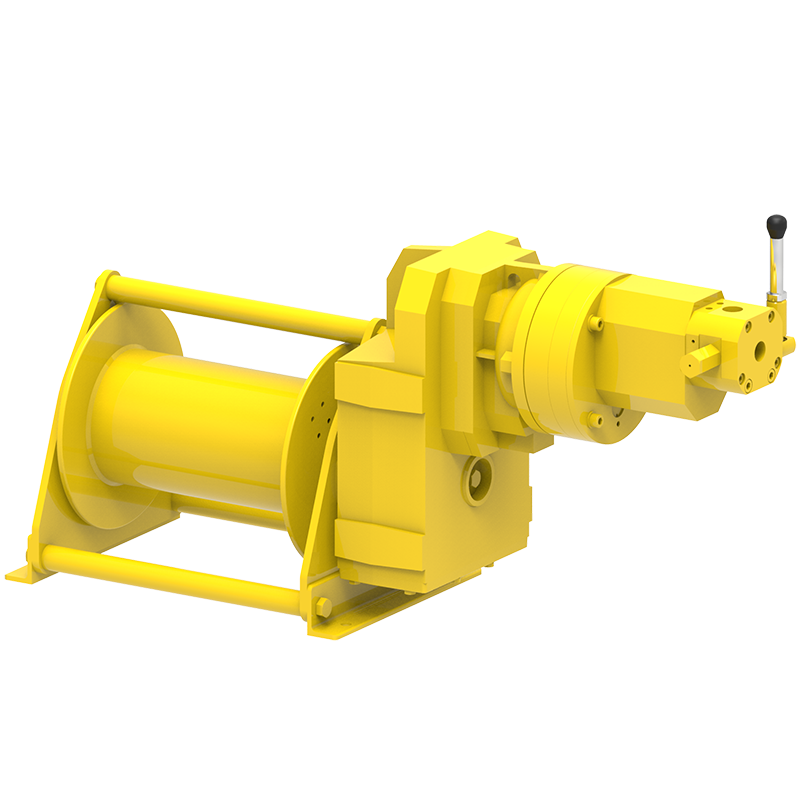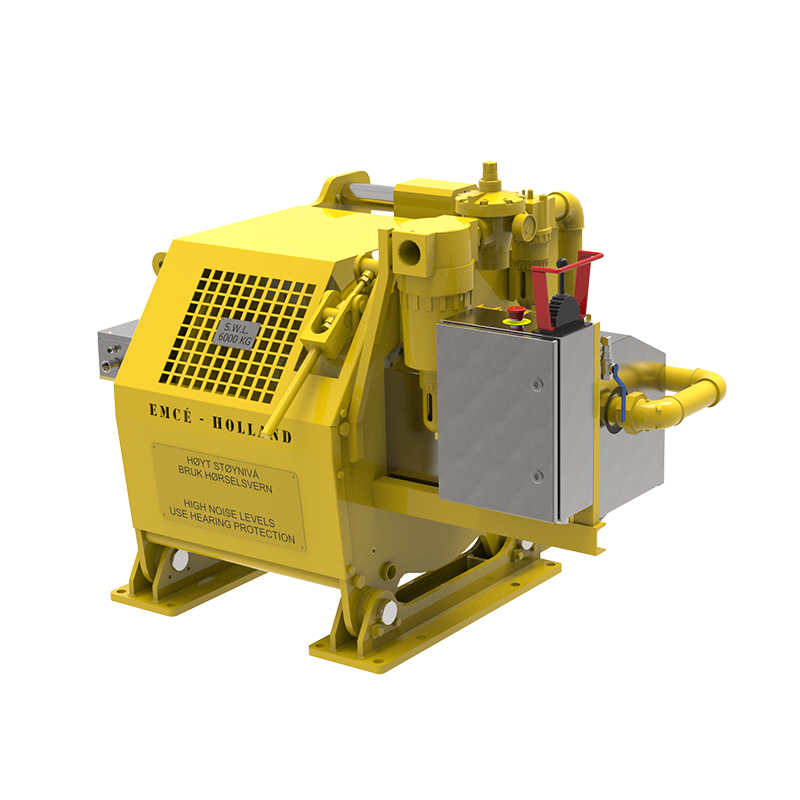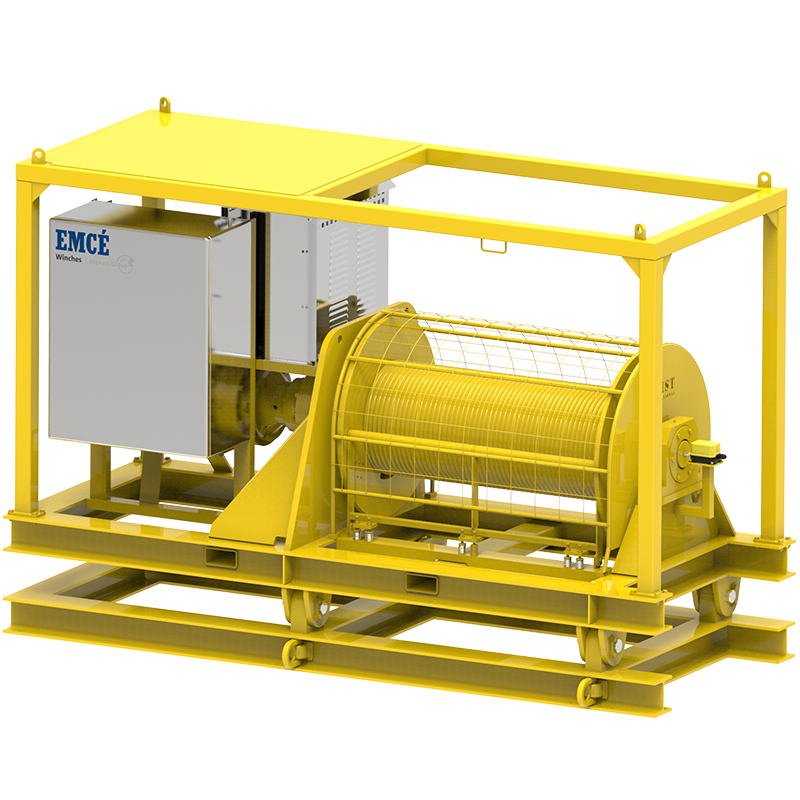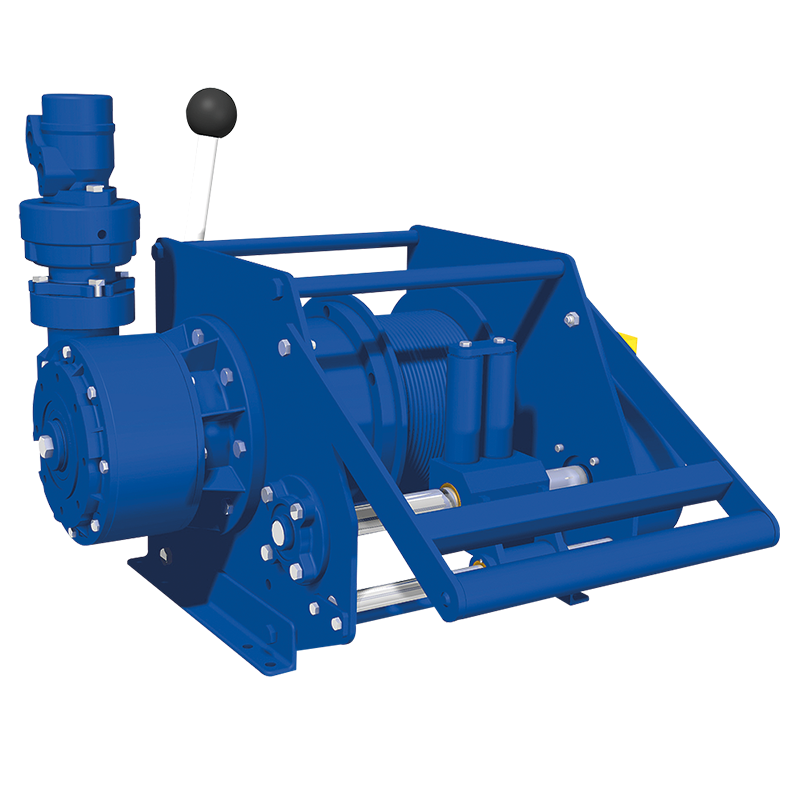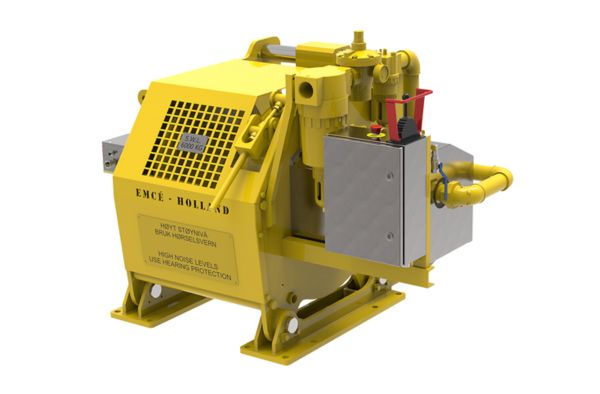
Red Rooster Lifting offers a series of EMCE air winches, suitable for a number of applications and offering varied load capacities.
About our EMCE Air Winches
Here is a quick overview of the air winches currently available.
OAW/OMR Offshore Series:
This is a robust lifting and pulling offshore air winch specially designed for offshore applications or for any other hazardous environment These winches are fitted with heavy duty planetary gearboxes and can be optioned for man riding applications.
LV Series:
Explosion-proof air winch providing a solution for pneumatic winch applications that demand lightweight construction. These winches find their use in general industry, oil and gas exploration and in many places where compact, explosion-proof hoisting gear is required.
A/F Series:
This is a standard air winch with a high efficiency gearbox. It is developed for medium duty pulling and lifting duties up to 2,700 kg.
SB Series:
The standard build SB type planetary gear winch provides the basis of the solution to many pulling and lifting winch applications. The winch is constructed in the Conventional manner with motor, gearbox and drum in line and offers lifting capacities of up to 20 tonnes.
FD Series:
This planetary gearbox winch is specially designed for applications where space is at a premium. These compact and lightweight lifting winches are ideally suited for installation on cranes, davits and derricks. The single drum support enables the rope to leave the drum at any angle.
TR Series:
These traction winches are built to order and can be executed with a self-braking worm gear or planetary gear depending on the load required. The traction winch is mainly used for traversing applications where a compact but heavy duty system is required. EMCÉ has supplied systems up to and including 10,000 kg.
AW/PW Series:
Accommodation ladder winch AW series are designed to position and hold accommodation and ship-to-shore ladders and ladders between vessels and offshore installations. The range features a dynamically and statically self-braking wormgear and emergency hand crank. Each type may be configured for single or twin rope operation and powered by means of an electric or pneumatic motor.
W/P/PW Series:
This windlass series has been especially designed for intensive use and therefore has a robust construction. All windlasses are designed with a self-braking gearbox (except P 1000 H and P 1600 H) which will save the costs of an expensive brake motor.
HR/UR/TW Series:
Hose reel, umbilical or transponder winches are mainly built for purpose. Winches are built to order and can be executed with a self-braking wormgear or planetary gear, depending on the load required.
The hose reel option is mainly used to reel hoses for fresh water supply, MDO fuel supply and hydraulic oil or to reel electrical power supply cables.
The umbilical winches are, generally, used to reel a combination of hoses, signal cables, coax or even fibre optic cables. Most of them come with slip rings and/or rotating swivels.
Transponder winches used for powered transponders are mainly used with electrical signal cables and have, in most cases, an electrical slip ring mounted.
Red Rooster Lifting has supplied these winches for offshore heavy lift vessels, offshore semi-subs, diving support vessels, research vessels, cable and pipe laying vessels and offshore pile-driving barges.
Red Rooster Lifting’s EMCE winches comply with the UK Machinery (Safety) Regulations 2008 and the European Machinery Directive. The equipment can be UKCA marked or CE marked.