Products

Load Measuring

Load Measuring

Red Rooster Lifting’s series of load cell products, for use in engineering, industrial processes, manufacturing, and scientific research comply with the UK Machinery (Safety) Regulations 2008 and the European Machinery Directive. The equipment can be UKCA marked or CE marked.

About our load measuring products

Here is an overview of our types of load cells.

Load Cells

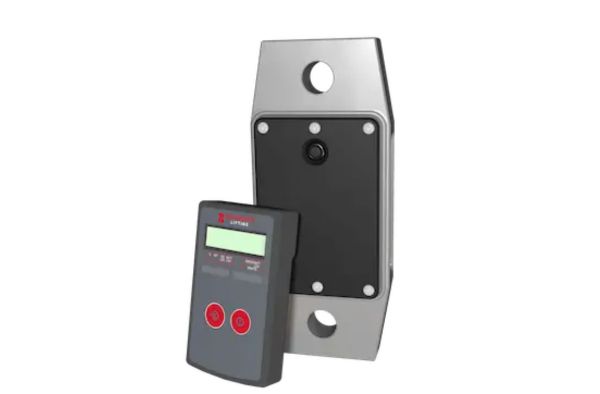
Red Rooster Lifting’s load cells have capacities from 5 to 500 tonne. Find out more.

Compression Load Cells

Red Rooster Lifting offers three different compression load cell products with load capacities ranging from 0.5 to 1500 tonne. Find out more.

Load Shackles

Red Rooster Lifting offers load shackles for industrial and marine applications. Find out more.

Crane Scales

Red Rooster Lifting has a range of crane scale equipment available, boasting capacities of 200 kg to 85 tonne.

Running Line Monitors

Find out more about running line monitors from Red Rooster Lifting, which can optionally monitor the length of the line out and speed in any engineering units.

Hire our Load Measuring Products

At Red Rooster Lifting we aim to offer you, the customer, the equipment you need when you need it. Our experienced staff will help advise you with your equipment needs and will quickly confirm price and availability.

Our hire rates reflect the duration, the quantity of equipment and specification required. From our head office in Aberdeen and depot in West Bromwich, we can supply our range of equipment worldwide at the most competitive rates possible.

  •  Avoid the capital outlay of new equipment
  • Technical support always available
  • Equipment tailored to your requirements
  • Leave the plant maintenance to your lifting team
  • Fast availability of large quantities and capacities at short notice
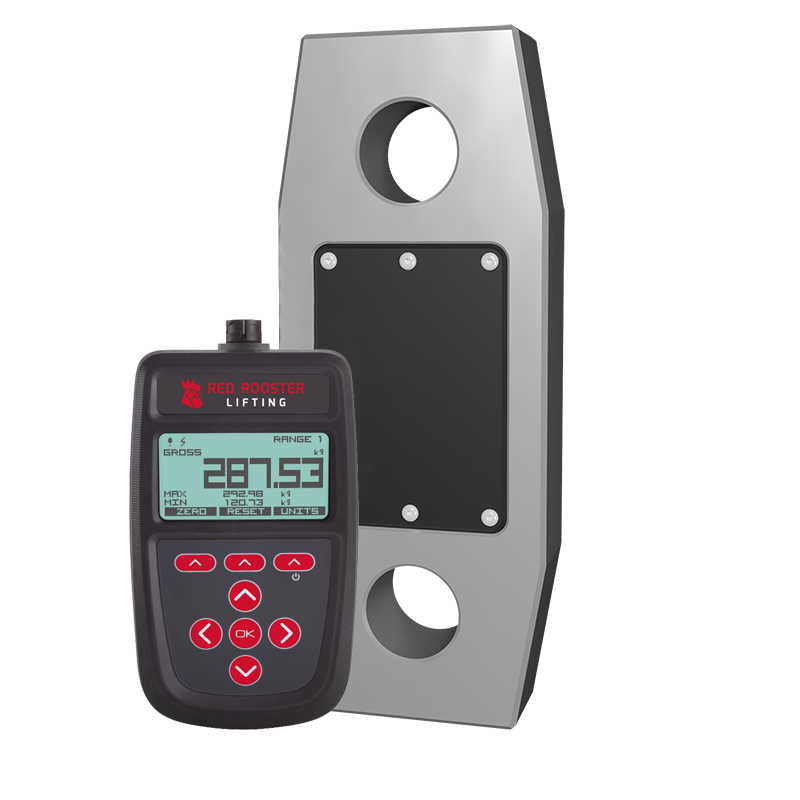
 

To hire a load measuring product, use form on our hire page or call our sales team today.
Read more

FAQs

A load cell is a transducer or sensor that is used to measure force or load in various applications.

The most common type of load measuring equipment can be found in the home, either in the bathroom or kitchen with bathroom scales or kitchen scales. Load cells are also commonly used in engineering, industrial processes, manufacturing, and scientific research to measure, monitor and control force and weight.

Some key characteristics and applications of load cells include various shapes and designs, including tension, compression, shear, and bending beam load cells, each suited to specific force measurement requirements.

They are typically made of materials like stainless steel or aluminium to ensure durability and resistance to environmental factors and offer high accuracy and sensitivity, making them suitable for applications requiring precise force measurements.

Load measuring equipment consists of 2 different forms, 1 converts a mechanical force to an analogue output by means of mechanical movements to a dial on a gauge, or 2, mechanical movement that is converted to an electrical signal which can be used to produce a load reading on various types of displays. The best way to picture this is with bathroom scales, some have the round dial that moves when stepped on, some have a digital screen. They both are utilising the same movement but displaying a different output).

The simplest of measuring devices use a lever connected to a dial, when the weight is applied, the needle moves around the dial to show a weight.

Modern load measuring devices utilize strain gauge sensors to convert the load acting on them into electrical signals. The gauges themselves are bonded onto a beam or structural member that deforms when weight is applied. In most cases, four strain gauges are used to obtain maximum sensitivity and temperature compensation. This is typically known as a wheatstone bridge.

Two of the gauges are usually in tension, and two in compression, and are wired with compensation adjustments. When weight is applied, the strain changes the electrical resistance of the gauges in proportion to the load. The output from these gauges can then be used as an input to various signal conditioners that can show a weight output.
There are also hydraulic load cells, these use oil pressure created when the load is applied to move the needle on a pressure gauge. These can also be connected to a pressure sensor which can give an electrical output if required.

Load cells are crucial in various applications, including weighing systems, material testing, industrial automation, and environmental monitoring, where precision in force measurement is essential.

It is recommended all load measuring equipment is calibrated at a maximum of 12 month intervals, this is to ensure they remain accurate. If the load cell is used in critical applications or harsh environments it may be relevant to reduce this time scale to 6 months. Some customers may wish to reduce this time scale purely depending on their own in house procedures.

There are a few different things to consider when selecting a load measuring device.

  1. What weights are being lifted?
  2. What are you using the equipment for.
  3. Do you require a portable piece of equipment, or can a static device be used?
  4. Do you require tension or compression?
  5. Do you require a wired or wireless system?
  6. What do you want from a display, do you require a load readings only or, do you require outputs that can offer data logging or links to a PLC using 4-20mA etc.


For help choosing the correct load cell for your application please contact a member of our sales team who will be happy to help.