

Winches are fundamental tools in various industries, from maritime and construction to theatrical rigging. At its core, a winch is a mechanical device designed to lift, lower, or pull in (wind up) or let out (unwind) a wire rope, cable, or chain, thereby pulling or lifting a load. Understanding their components and proper operation is crucial for both efficiency and, more importantly, safety.
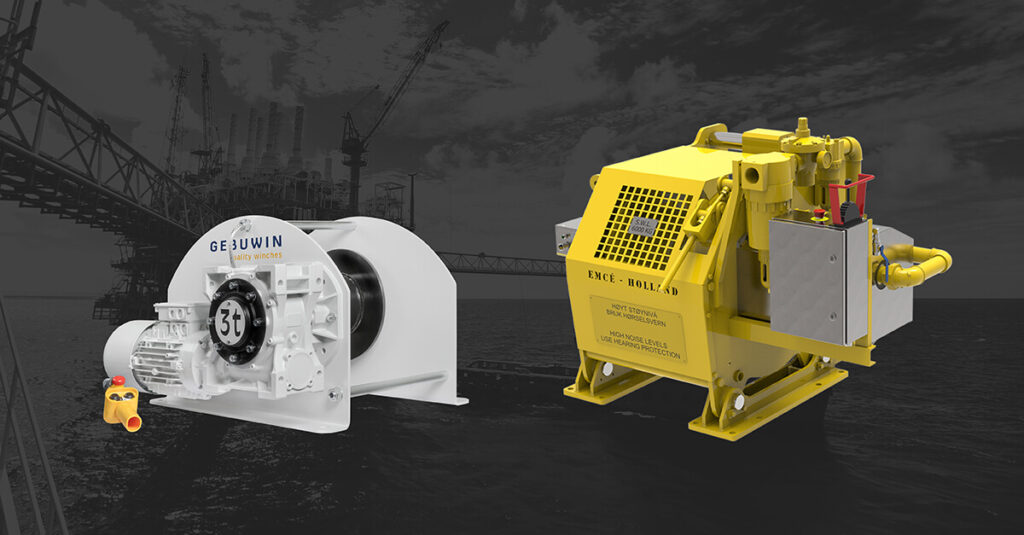
The Basic Principles of Winches
At its simplest, winches consist of a drum around which a rope or cable is wound and a power source that rotates the drum. This rotation generates the lifting, lowering, or pulling force. The force created by the winch is magnified through a gearing system, allowing a relatively small input force to move or hold a much larger load. Safety relies heavily on understanding load capacities, proper anchoring, and maintaining the integrity of all components.
Power Types for Winches
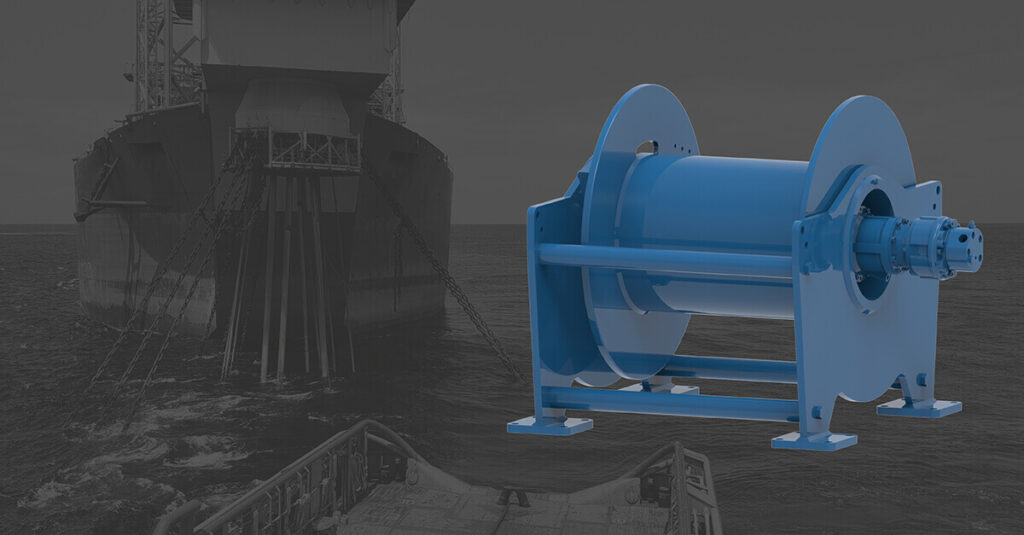
The power source dictates the winch’s application, performance characteristics, and required infrastructure.
Electric
An electric motor powers electric winches, typically AC (for industrial/stationary applications). They are versatile, relatively quiet, and easy to control.
- Advantages: Consistent power, easy integration with control systems, suitable for various environments.
- Considerations: Requires a reliable power supply, can overheat with continuous heavy use, and may be less powerful than hydraulic units for extreme loads.
Hydraulic (Oil)
Hydraulic winches use fluid pressure generated by a pump to power the motor. These winches are known for being extremely powerful and providing smooth operation.
- Advantages: High torque, excellent for continuous heavy-duty cycles, highly reliable in demanding environments.
- Considerations: Requires a hydraulic power unit, hoses, and fluid, potentially leading to more complex installation and maintenance.
Pneumatic (Air)
Pneumatic winches operate using compressed air. They are particularly favoured in environments where electrical sparks are a hazard.
- Advantages: Intrinsically safe in explosive atmospheres (no sparks), simple design, resistant to dust and moisture.
- Considerations: Requires a compressed air supply, power can fluctuate with air pressure, and can be noisy.
Transmission Options for Winches

The transmission system is critical, as it multiplies the motor’s torque to provide the necessary lifting, lowering, or pulling force and controls the drum’s speed.
Wormgear Transmissions
Wormgear transmissions feature a worm (a screw-like gear) meshing with a worm wheel.
- Characteristics: Offer high reduction ratios in a compact space, are often self-locking (preventing back-driving by the load), and provide smooth operation.
- Applications: Common in winches where holding the load without continuous power is critical, and high torque is needed at lower speeds.
Planetary Transmissions
Planetary gear systems consist of a central “sun” gear, planetary gears that revolve around the sun gear, and an outer “ring” gear.
- Characteristics: Highly efficient, compact for their power output, and distribute loads evenly across multiple gears, leading to durability.
- Applications: Frequently used in heavy-duty winches for their strength-to-size ratio and efficiency.
Spur Gear Transmissions
Spur gears are the simplest type of gear, with straight teeth mounted on parallel shafts.
- Characteristics: Efficient and capable of high speeds, but can be noisy and require multiple stages for high reduction ratios.
- Applications: Often found in lighter-duty winches or as part of multi-stage gearboxes.
Bevel Gear Transmissions
Bevel gears have teeth cut on a conical surface and are used to transmit power between shafts that are at an angle to each other.
- Characteristics: Allow for changes in direction of rotation within the gearbox.
- Applications: Less common as the primary reduction in winches but can be used in specific configurations to achieve desired shaft orientations.
The Parts of a Winch
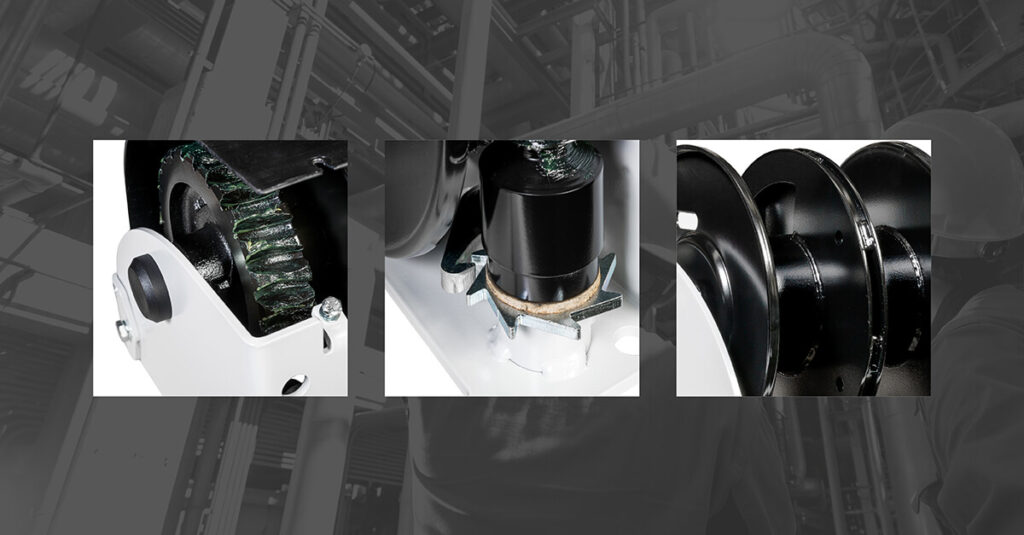
Understanding the individual components of a winch is essential for effective operation, maintenance, and troubleshooting.
The Drum
The cylindrical spool around which the wire rope, cable, or chain is wound. Its size and capacity determine the length and diameter of the rope it can hold.
Anchor Point
The secure fixed point to which the winch body or the end of the rope/cable is attached, providing the necessary resistance for lifting, lowering, or pulling.
Rope Anchors
Mechanisms on the drum (e.g., clamp, wedge, or bolt) are used to securely fasten the initial end of the wire rope to the drum.
Top and Bottom Run Off
Refers to how the wire rope spools onto the drum, either from the top or the bottom. This affects the fleet angle and overall alignment.
RH and LH Rope Lay
Describes the direction of the strands and wires within the rope. It’s crucial to match the rope lay to the drum’s grooving (if present) for proper spooling.
Grooving
Helical grooves are machined into the drum surface to guide the wire rope, ensuring neat, even layers and preventing crushing or bird-caging of the rope.
Fleet Angle
The angle at which the wire rope approaches the drum from the first sheave or fairlead. Maintaining an optimal fleet angle (typically 1.5 to 2.5 degrees) is critical for proper spooling and preventing rope damage.
Band Brake
A type of brake consisting of a flexible band, lined with friction material that wraps around a rotating drum to create braking force. Commonly used in winches for holding loads.
Clutch
A mechanism that engages or disengages the power source from the drum, allowing the drum to spin freely (freewheel) or to be powered.
Spooling Gear
A device that mechanically guides the wire rope evenly across the drum during winding and unwinding, preventing piling up and ensuring optimal spooling.
Typical Spooling Gear Installation
Spooling gear typically consists of a traverse screw and a carriage that moves back and forth, pushing the rope into neat layers on the drum.
Winch Frame
The robust structural framework which houses and supports all the winch components, ensuring rigidity and stability during operation.
Surface Protection
Coatings or treatments applied to the winch components (e.g., paint, galvanisation, marine-grade finishes) to protect against corrosion, abrasion, and environmental factors.
Controls
The interface through which the operator manages the winch’s functions (e.g., start/stop, speed, direction, braking).
Manual Controls
- Hand Crank: A handle rotated by hand to operate smaller, manual winches.
- Handle: A generic term for a gripping part used for manual operation or adjustment.
Electrical Control Options
- Standard Control Box: A fixed enclosure housing buttons, switches, and indicators for direct operation.
- Remote Control Options:
- Pendant Control: A handheld control unit connected to the winch via a cable, allowing the operator to stand at a safe distance.
- Wireless Remote Control: Offers even greater freedom of movement and safety by removing the physical cable connection.
- Load Limiter: A safety device that prevents the winch from lifting, lowering or pulling loads exceeding its rated capacity, protecting both the equipment and personnel.
- Limit Switches: Electrical switches that detect the position of the rope, drum, or load and automatically stop or slow the winch.
- Spindle Limit Switch: Activated by the rotation of a threaded spindle, typically used for precise upper/lower limits.
- Proximity Limit Switches (Mechanical Type): Activated by physical contact with a moving part.
- Advanced Controls: Sophisticated control systems that can include variable speed drives, load cells for precise weight monitoring, programmable logic controllers (PLCs) for automated sequences, and detailed feedback and diagnostics.
Hydraulic Control Options
Typically involves directional control valves, pressure relief valves, and flow control valves to manage the hydraulic fluid’s direction, pressure, and flow to the motor, thus controlling winch speed and direction.
Pneumatic Control Options
Similar to hydraulic, using pneumatic valves to control the flow of compressed air to the air motor, dictating speed and direction.
Explore Our Winches
At Red Rooster Lifting, we offer a comprehensive range of EMCE and Gebuwin winches, designed and manufactured to the highest safety and performance standards. Whether your application demands manual, electric, hydraulic, or pneumatic power and specific transmission types or advanced control features, our expert team can guide you to the ideal solution.Contact us today to discuss your specific lifting or pulling requirements.