

For offshore operators, the period between April and October is one of the most important windows in the maintenance calendar. Calmer weather, better sea state and safer external access often make it the most practical time to carry out planned shutdowns, inspection-led repairs and critical asset replacement activities offshore. This is why offshore maintenance work typically peaks during these months.
At the same time, this concentration of work brings pressure. Maintenance scopes are tightly scheduled, downtime carries real cost, and lifting equipment needs to be available, dependable and technically suited to the job.
For companies operating in offshore oil and gas, maintenance campaigns rarely follow a perfectly predictable route. A planned scope can expand once inspection work begins. A shutdown window can tighten. A critical component may need to be removed and replaced unexpectedly without delay. When that happens, access to the right lifting solution becomes more than a convenience. It becomes part of keeping the operation moving.
This is where rental air hoists play an important role.
At Red Rooster Lifting, we support offshore teams with practical rental solutions built for demanding environments, backed by technical knowledge, so maintenance work can continue safely and efficiently when time is tight.
Why the April to October window matters
The offshore maintenance season is largely influenced by weather conditions. Improved access and safer working environments during this period make it an ideal time for operators to undertake shutdowns, equipment replacements and major maintenance programmes. It is also a key opportunity to service and upgrade critical assets, including pumps, valves and processing equipment, helping to maximise operational reliability and efficiency.
That concentration of activity creates its own challenges. Shutdown programmes, external module work, pump and valve change-outs and wider maintenance activity all place pressure on uptime, labour coordination and access arrangements. In these environments, lifting equipment must do more than simply meet a capacity requirement. It must suit the available space, the nature of the task, the urgency of the work and the operating conditions offshore.
That is why many offshore teams look to rental as the most practical route to securing specialist lifting equipment without delaying the work scope.
Planned maintenance needs more than equipment availability
When a shutdown or maintenance campaign is scheduled in advance, there is an opportunity to select the most suitable lifting solution before the work begins. This is where a trusted rental partner adds value early.
A well-supported rental package can help offshore teams prepare for shutdown support activities, scheduled maintenance work, pump and valve replacement, external module work and restricted access lifts where compact equipment is essential.
The best results usually come from early technical alignment: confirming duty, available headroom, operating environment, lifting height, capacity and any site constraints that may affect hoist selection. Offshore lifting challenges are often shaped by layout restrictions rather than by load alone, which is why technical understanding matters just as much as product availability.
Why rental air hoists are valuable offshore
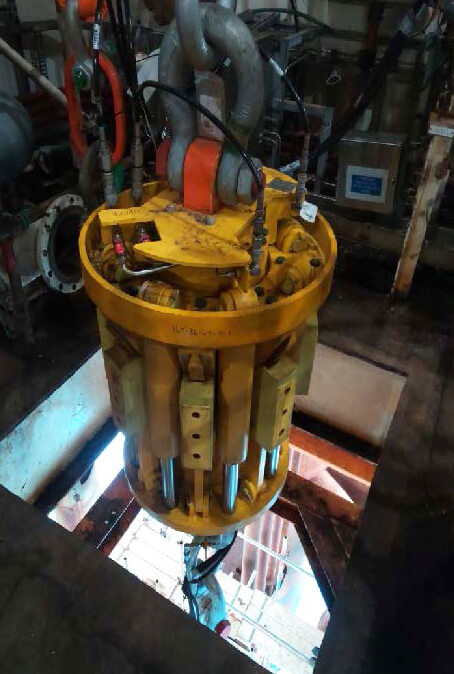
Red Rooster Lifting’s air hoists are suited to industrial and marine environments, ranging up to 60 tonne capacity with options designed for standard, low headroom and ultra-low headroom applications where space is limited or access is difficult.
For more complex offshore lifting requirements, Red Rooster Lifting also offers cross-hauling air hoists with capacities up to 30 tonnes. These are suitable for working fully loaded at angles from the vertical and can be used for positioning and transferring loads horizontally between hoists. These hoists are often used under deck offshore, where space is tight and controlled movement is essential.
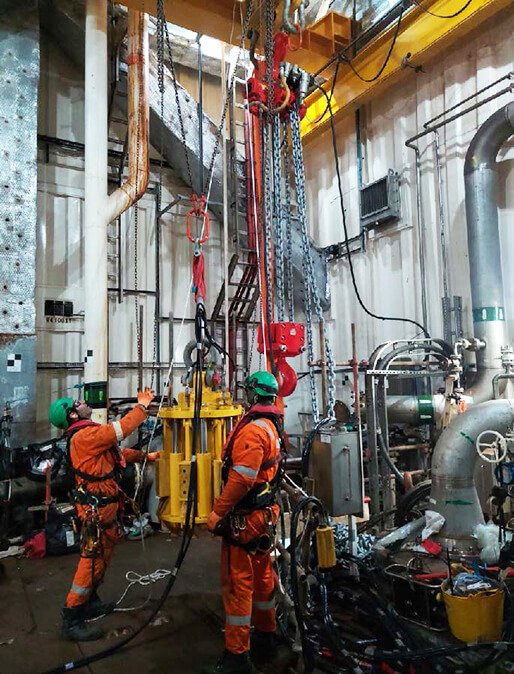
That matters offshore, because maintenance teams often need dependable lifting support during planned shutdowns, specialist options for restricted areas and equipment that can be deployed quickly when additional work is identified.
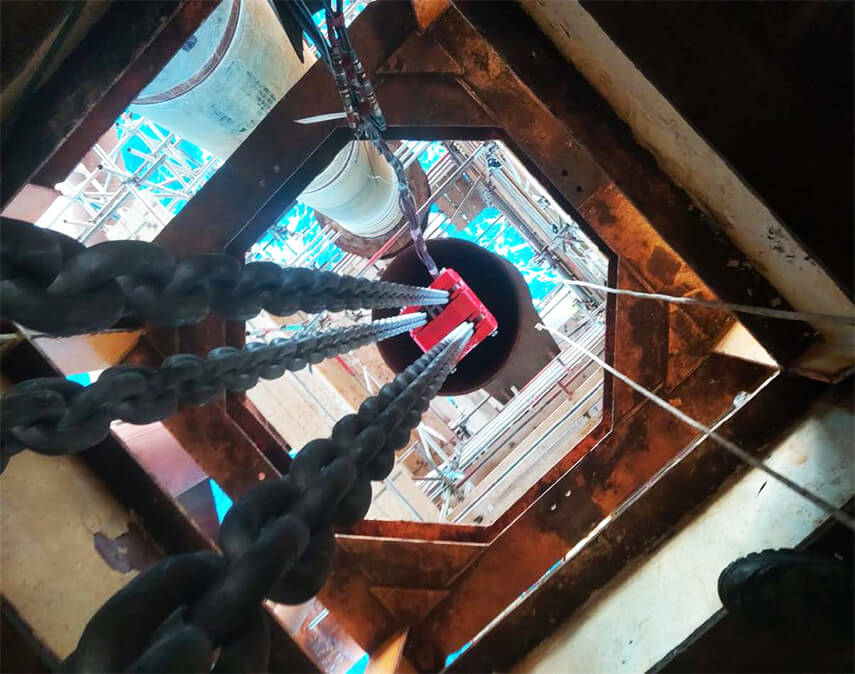
At Red Rooster Lifting, we support demanding offshore lifting operations with dependable solutions built for the realities of the job. In one complex caisson destruct operation, we supplied two 60-tonne pneumatic hoists with a 15-metre height of lift, together with a third standby unit prepared with a 29.5-metre height of lift in case requirements changed during the operation. By preparing that additional unit in advance, we helped the customer maintain schedule integrity and reduce the risk of downtime during a critical phase of work.
Read the full case study here
When planned work becomes reactive
Not every offshore lifting requirement is known at the planning stage. A routine shutdown can reveal additional repair work. An inspection can uncover deeper issues. An already challenging scope can expand quickly, placing immediate pressure on schedules, contractors and production priorities.
In these moments, offshore teams need more than equipment availability. They need a lifting partner who can respond with strong technical knowledge, support urgent deployment and understand that downtime has commercial consequences.
That is why responsive rental support matters. The value is not simply in having equipment available. It is in having access to the right support when the job changes unexpectedly.
Why the right lifting partner matters
Offshore shutdown season is not just a busy period. It is a time when maintenance teams are under pressure to complete essential work safely, efficiently and without unnecessary delay.
For those teams, the right lifting partner is one that can support both the planned scope and the unexpected realities that emerge once work begins.
Rental air hoists have a clear role to play in that environment, particularly where space is restricted, time is limited and the cost of downtime is high. For offshore operators preparing for shutdowns, scheduled maintenance or reactive repair work between April and October, the difference is not only access to equipment. It is about having the right lifting partner in place to keep critical work moving – no matter how complex the challenge.