


The marine and offshore environments represent arguably the most hostile operational settings for heavy-duty lifting equipment globally. From exploration platforms anchored miles from shore to vessels navigating open waters, the challenges are relentless.
Standard, off-the-shelf crane systems are not designed to withstand constant exposure to saltwater, extreme temperature fluctuations, and dynamic vessel motion. This failure to account for environmental factors results in rapid component degradation, system failure, and costly downtime.
To ensure uncompromising safety and operational longevity in these extreme conditions, specialised engineering and design choices are mandatory. We’ll dive into the solutions required, exploring everything from specialised materials to safety compliance measures, including ATEX explosion proofing, and how Red Rooster Lifting provides systems built to last in this niche sector.
Why Extreme Offshore Conditions are a Challenge for Crane Solutions
Saltwater Corrosion and Humidity
The combination of salt spray and persistently high humidity creates a highly corrosive atmosphere that rapidly degrades standard metals and finishes. Components like lifting chains, wire ropes, structural steel, and even basic fasteners are under continuous attack, leading to rust, material thinning, and premature failure if not specifically treated. This constant exposure is a major cause of component failure in marine applications.
Dynamic Loading and Motion
Unlike land-based operations, lifting and positioning loads offshore often occurs while the vessel or the rig is in motion. This requires the pneumatic hoists and winches to possess advanced control and stabilisation capabilities to prevent the load from swinging violently or introducing shock loads to the structure.
Temperature and Operational Extremes
Offshore platforms operate across the globe, subjecting equipment to wide temperature variations. This includes:
- Freezing conditions in the North Sea or Arctic, demanding materials that resist weakening and control systems that function reliably in sub-zero cold.
- Areas with intense solar heat require coatings and materials that resist thermal degradation and UV exposure.
Solutions to Counter Extreme Offshore Conditions in Crane Design
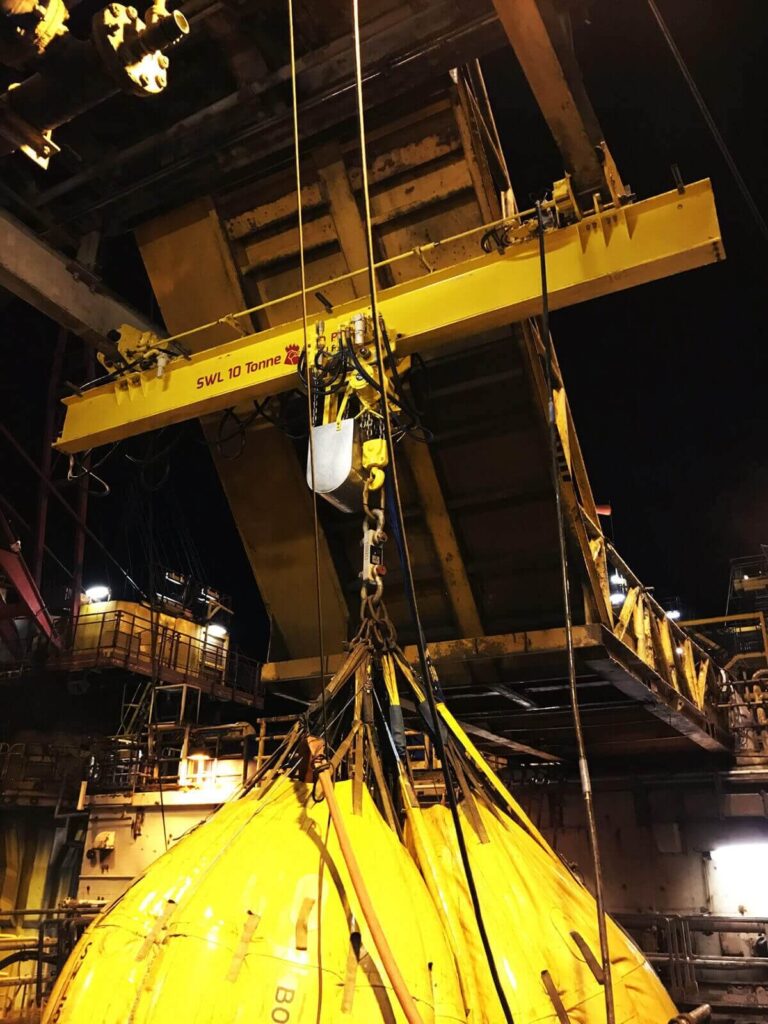
The unique nature of offshore demands that cranes and hoists be designed from scratch, focusing solely on resilience and safety. Since offshore operations often preclude the use of electricity due to spark risk, pneumatic (air-powered) solutions are the common choice for hoists and winches, eliminating electrical risk.
Specialised Materials and Robust Design
Enhanced Structural Protection
To counter the aggressive corrosion of salt spray, Red Rooster Lifting employs high-grade structural steel combined with a robust CX marine paint specification. This multi-layer coating system is specifically designed to resist continuous exposure to salt and moisture. While we don’t use stainless steel for structural components, non-corroding materials are applied elsewhere. For instance, bronze coatings can be applied to hooks and other components to eliminate spark risk.
Enhanced Braking and Overload Protection
To effectively manage the sudden, dynamic load shifts common in marine settings, offshore crane designs incorporate higher safety factors than standard industrial cranes. Features include reliable, failsafe disc brakes designed for quick response and overload protection mechanisms that prevent the pneumatic hoist from exceeding its safe working limit, even during a sudden heave or sway.
The selection and sizing of the drive mechanism are critical, and many modern offshore cranes utilise a rack and pinion drive system for precise and robust slewing. This drive consists of a circular gear (pinion) that meshes with a linear toothed bar (rack). Engineers consider the Design Analysis Factor (DAF) during the design phase to ensure the rack and pinion can withstand the extreme peak forces associated with dynamic loading and severe sea states.
Safety Compliance in Hazardous Zones
ATEX and Explosion Proofing
Offshore oil and gas platforms present the danger of flammable gases (like hydrocarbons) or dust potentially being present. This requires strict adherence to European ATEX directives for equipment operating in designated hazardous areas (Zone 1 and Zone 2). All RRL pneumatic lifting equipment destined for these zones is designed and certified to be explosion-proof, ensuring that the equipment itself cannot be an ignition source.
Certification and Traceability
In the offshore industry, complete safety compliance is paramount. Every critical component of the crane system must have full certification traceability. This ensures the equipment meets stringent marine and offshore compliance standards set by bodies like DNV (Det Norske Veritas), ABS (American Bureau of Shipping), or Lloyds Register, verifying its material composition, design integrity, and testing history.
Custom Engineering for Uncompromising Reliability

Premature crane system failure, due to corrosion or inadequate handling of dynamic loading, can result in severe issues for project managers and engineers, such as expensive downtime, schedule delays, and heightened safety hazards.
By implementing custom solutions—from the CX marine-grade painting and bronze coatings to the incorporation of ATEX-certified pneumatic power and advanced braking systems—RRL ensures operational consistency and safety.
Red Rooster Lifting doesn’t just supply equipment; we specialise in providing systems tailored to these unique, demanding operational environments. We provide engineering expertise and custom solutions that go far beyond off-the-shelf equipment, guaranteeing reliability where it matters most.
Contact us today to find out how we can assist in designing the ideal crane system for use in extreme environments.
FAQs
What is the main advantage of using pneumatic hoists in an offshore environment?
Pneumatic (air-powered) hoists are the industry standard because they inherently eliminate the risk of electrical sparking, making them suitable for ATEX hazardous zones where flammable gases may be present. They also offer precise control for managing dynamic loads.
ATEX Zone 1 is a hazardous area classification where an explosive atmosphere (like gas, vapour or dust) is likely to occur occasionally. Equipment operating here must be certified as explosion-proof, ensuring it cannot create a spark or surface temperature high enough to cause ignition.
We use high-grade structural steel protected by a multi-layer CX marine paint specification, which is formulated to resist continuous exposure to salt spray and high humidity better than standard industrial coatings.
Yes. You require hoists and winches with enhanced braking systems (rack and pinion) and often higher safety factors built into their design to safely absorb and manage the sudden, dynamic load shifts introduced by vessel motion.