

In complex industrial sectors such as oil and gas, marine, and specialist manufacturing, off-the-shelf lifting equipment is often inadequate and can lead to project failure. Standard hoists simply cannot meet extreme constraints like corrosive environments, complex load configurations, limited space, or specialised control systems.
Engineers and project managers consistently face a gap between standard product specifications and their project needs.
Red Rooster Lifting closes this gap. We offer a proven, end-to-end custom design process that transforms unique project requirements into certified, reliable lifting solutions, from the initial concept to the final lift.
Phase 1: Defining the Challenge
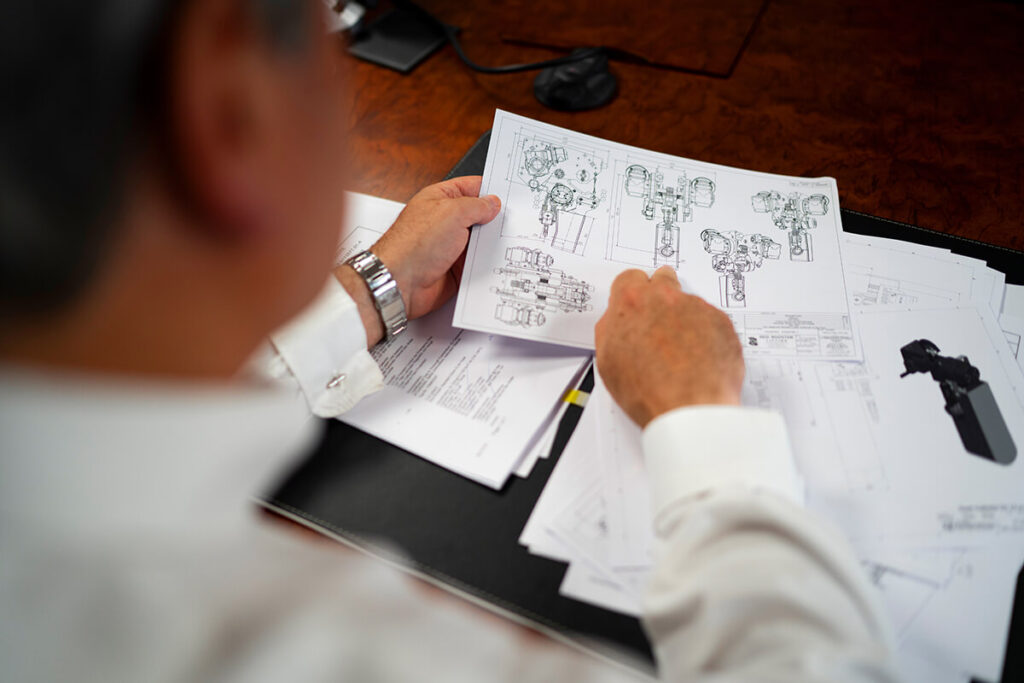
Our process begins with a conversation, not a catalogue. The goal of the initial consultation is to achieve a contextual understanding of the operational environment, which is always more important than simply knowing the weight of the load you need to lift. Getting this right is critical; a misstep here causes projects to fail. It’s our job to make sure it doesn’t.
Initial Consultation and Scoping
We drill down into the details to understand the full scope of the challenge. This is where we gather the project specific data:
- Environment: Is the application subject to ATEX/hazardous area requirements (Zone 1 or 2)? Will it be operating subsea, in high heat, or extreme cold?
- Operational Footprint: What are the spatial constraints? This often dictates the need for ultra-low headroom, non-vertical lifting, or specialised trolley designs.
- Duty Cycle: Is this a continuous operation (FEM 1Am / ISO M4) or intermittent? Pneumatic motors are commonly referred to as 100% duty rated, which simply means that they may be used continuously without a cooling-down period and without damage to components as a consequence.
- Height of Lift (HOL) and Control: Does the lift require chain capacities reaching several hundred metres, integrated with radio control (instead of standard pendant) for operator safety?
Rigorous Requirements Specification
The project manager and design engineer collaborate to formalise these needs into a detailed brief. We gather all data points, including specific safety factors well beyond minimum compliance, and necessary third-party certifications where applicable (DNV, ABS, Lloyds), which are crucial for marine and offshore deployment.
Phase 2: Design and Approval
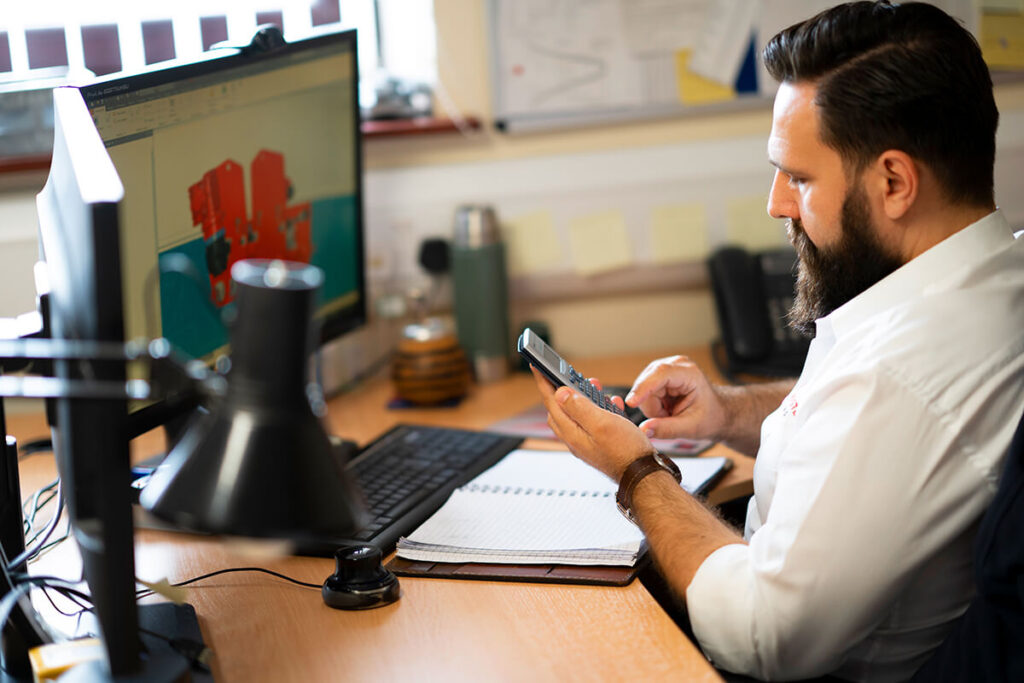
Once the challenge is clear, we translate performance needs into a design that acts as our manufacturing contract.
Conceptualising the Solution:
This stage involves an initial feasibility assessment, often resulting in concept sketches and engineering calculations.
- CAD Development: Concepts are quickly moved into precise engineering documentation. We develop detailed 2D and 3D CAD models for all physical components and assemblies. This allows us to perform virtual fit-up and stress analysis long before any manufacturing commences, mitigating geometric conflict risks early.
- Modification or Bespoke: We confirm whether an existing, highly robust Red Rooster product (like our TMH series) can be modified for rapid turnaround and proven reliability or if a completely bespoke hoist design is necessary for truly unique loads (e.g., articulation, rack and pinion).
Client Review and Final Sign-Off
We present the full proposal, including detailed design and a comprehensive quote. This is a crucial, non-negotiable step: the client confirms the general assembly drawing meets every single operational requirement via design approval. Only after this final sign-off is the design confirmed and officially released for production, producing final manufacturing drawings.
Phase 3: In-House Production and Customisation
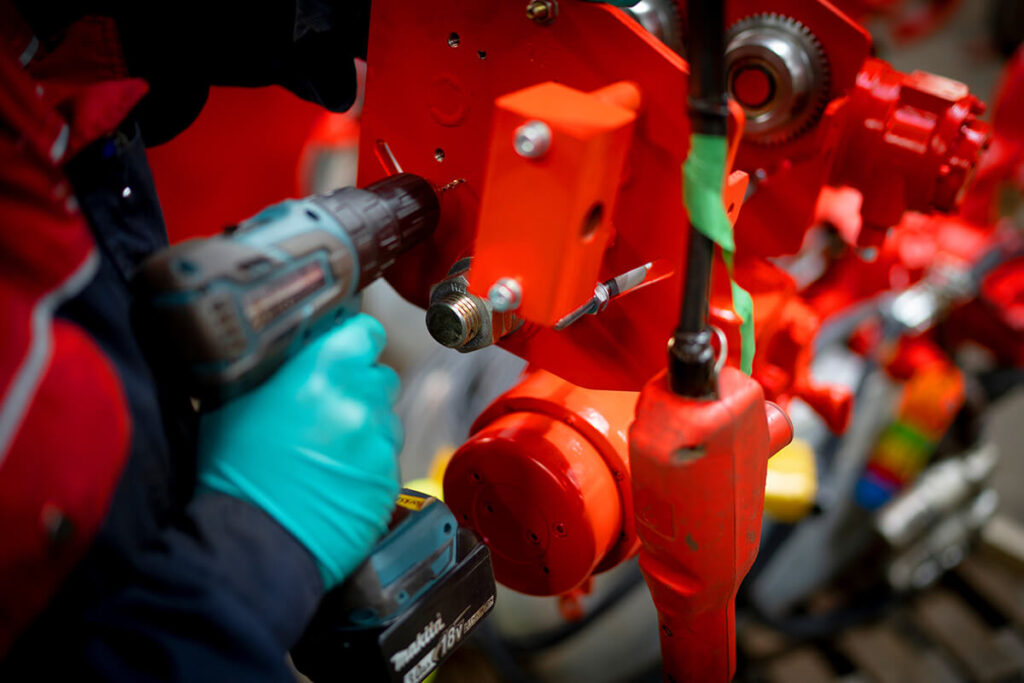
Controlling the manufacturing environment is how we guarantee quality, manage lead times, and ensure the final product matches the brief perfectly.
In-House Machining and Fabrication
A significant advantage is our fully equipped in-house machine shop. Creating precision components internally ensures stringent quality control and guarantees adherence to the custom design tolerances. This capability minimises reliance on external suppliers, often resulting in a critical reduction in lead time and cost for urgent projects.
- Custom Fabrication: This capability is vital for creating unique designs, such as incorporating into existing client infrastructure, oversized chain buckets for deep lifts, or the precise fabrication of unique trolleys designed to fit non-standard beam profiles.
Sub-Assembly and Special Treatments
Critical components are pre-assembled and treated according to the operating environment:
- Custom Painting and Coatings: Application of specialised finishes is often mandatory for durability. This often includes NORSOK or NACE-certified coatings for harsh offshore or chemical processing environments, providing proven corrosion resistance.
- Load Path Preparation: Critical items like chains are precisely measured, cut, lubricated, and terminated to the exact specified Height of Lift (HOL),.
Phase 4: Testing, Documentation, and Deployment

The true measure of a custom solution is its performance. Every Red Rooster Lifting custom hoist undergoes rigorous validation.
Comprehensive Testing and Certification
Certified testing verifies the hoist will meet the challenge under load:
- Function Testing: Verification of speed and safety device activation, such as emergency stop,
- Load Testing: Conducting certified static load tests where applicable and dynamic load tests (e.g. 125%) to the required industry standards in our testing facilities.
- Special Testing: Performing supervised Factory Acceptance Testing (FAT) attended by client representatives, and Non-Destructive Testing (NDT) on critical welds or components as specified by the client’s requirements.
Documentation and Logistics
We can provide complete documentation packages, essential for project handover and regulatory compliance: material certificates, full test reports, third-party certification paperwork, and detailed operation/maintenance manuals. Equipment is packaged meticulously for specific, compliant transport methods (road, air, sea) in line with export standards.
Final Installation and Training
Red Rooster Lifting engineers are available globally for on-site assistance with installation and final commissioning. We offer structured training courses for safe operation and servicing, ensuring the client achieves a successful, safe, and reliable first lift—the true measure of a successful custom solution.
Your Trusted Partner in Lifting Innovation
The Red Rooster Lifting process, from initial consultation to certified performance, is built on collaboration, precision engineering, and rigorous testing. We don’t just supply hoists; we engineer partnerships. When your project demands a truly bespoke lifting solution, our end-to-end process guarantees equipment that is safer, smarter, and perfectly aligned with your operational success.
FAQs
What types of lifting challenges necessitate a custom hoist solution?
Challenges include extreme environmental factors (e.g., sub-zerotemperatures or hazardous ATEX zones), unique load geometries, lifts over 100 metres, complex PLC integration, or restrictive dimensional constraints (requiring ultra-low headroom or specialist trolley fabrication).
How long does the custom design and manufacturing process typically take?
The timeline is dependent on the complexity of the design and the required certification schedule. By keeping the design, manufacturing, and certified testing processes in-house, we reduce reliance on external supply chains, allowing us to deliver solutions in the shortest practical period.
Does Red Rooster Lifting provide the necessary documentation for complex custom projects?
Yes. We can provide complete documentation packages, including material certificates, detailed engineering drawings, third-party certification documentation (DNV, ABS, Lloyds), and comprehensive Factory Acceptance Test (FAT) reports, all essential for regulatory compliance and audit trails.
Can you adapt an existing hoist in your product line, or do you always build from scratch?
We offer both. Often, we can modify a core Red Rooster Lifting product, such as customising the HOL, adding coatings, or engineering a unique trolley. Where the application is truly unique, we leverage our engineering team to design a bespoke hoist tailored to your requirements.